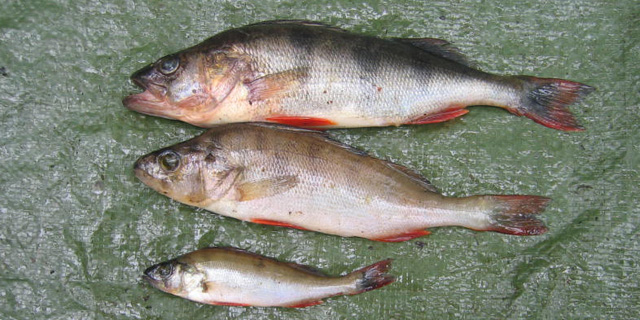
The perch (Perca fluviatilis) is a predatory fish up to about 45-50 cm in size that hunts in shoals, which often stay on the bottom, but large perches often hunt small fish on the surface in the evening, often shallow-living schooling fish such as tench and the like.
The perch spawns in late spring, and to spread its genes it has developed a strange spawning behavior. The females lay the rumen on branches, stones or aquatic plants. The males circle her to fertilize the eggs. When she periodically changes substrate or simply changes direction, the male that circled her in the previous one continues while he is replaced by a new one, until the behavior is repeated. The rum is laid in long milk-white continuous strings.
The perch is primarily a freshwater fish, but also lives in the brackish waters of the Baltic Sea. Large females can reach a weight of over 2 kg. Perches in smaller lakes can develop into a smaller form called thousand brothers if predatory fish are missing, the Swedish record for sport fishing, however, is caught in a small lake where a perch of a certain size was planted, the record is 3.15 kg. Another unnatural influence that leads to large perch is hot water discharge, for example from nuclear power plants, as the increased temperature causes the fish to grow faster.
Perches are a popular food fish among hobby fishermen, especially anglers and anglers. The classic way to eat the fish is as breaded, butter-fried fillets. It has many small fine bones that make it difficult to eat, but if you attack it from the back you can avoid most of them.
The name perch was originally called aghborre, "agh" is somewhat pointed and toothed and is used for the same meaning on the agen within the sturgeon family. "Borre" also has the meaning thorny eg. velcro. Borre is also found in German and English as Barsch and bass (sea bass).